Thermo King Parts Guide: Compressor Components That Keep Your Cold Chain Running
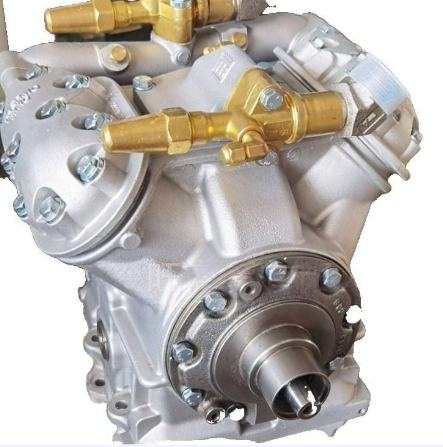
The refrigeration compressor is the mechanical centrepiece of every Thermo King transport refrigeration unit, and its constituent components are the most consequential thermo king parts in the entire system from a maintenance and reliability perspective. Understanding how each major compressor component contributes to the unit's performance — and what the early signs of component wear look like in practice — gives fleet technicians and maintenance managers the knowledge they need to make timely intervention decisions that prevent minor wear from escalating into catastrophic failure.
The Cylinder and Piston Assembly
The cylinder and piston assembly performs the fundamental mechanical work of the refrigeration compressor: drawing low-pressure refrigerant vapour from the evaporator, compressing it to high pressure and high temperature, and discharging it toward the condenser. In a small-crankshaft reciprocating compressor such as the Thermo King X430/X426, multiple pistons operating in a radial or in-line arrangement work simultaneously to provide relatively smooth, high-frequency refrigerant flow with minimal pulsation. The cylinder bore diameter and piston ring specification determine the compressor's volumetric efficiency — the ratio of actual refrigerant delivered to the theoretical maximum for a given swept volume. As cylinder bore wear increases with accumulated operating hours, volumetric efficiency declines, reducing cooling capacity and forcing the compressor to run for longer periods to maintain the required set-point temperature.
Reed Valves: Controlling Refrigerant Flow Direction
The reed valves in a reciprocating compressor are thin, flexible metal strips that act as one-way check valves — allowing refrigerant to flow into the compression chamber on the intake stroke and preventing backflow on the compression and discharge strokes. These valves are subject to high-frequency mechanical stress — opening and closing thousands of times per minute at operating speed — combined with the thermal and chemical exposure of the refrigerant and oil mixture. Reed valve fatigue or cracking causes refrigerant backflow that reduces volumetric efficiency dramatically, and in severe cases causes the compressor to run hot and eventually seize. Reed valve assemblies are a critical inspection item during any compressor overhaul, and replacement at the manufacturer's recommended interval is essential in high-duty-cycle applications.
Crankshaft Bearings: The Foundation of Mechanical Reliability
The crankshaft bearings support the rotating mass of the crankshaft and connecting rod assembly against the radial and axial forces generated during compression. Bearing failure — resulting from inadequate lubrication, oil contamination by refrigerant or moisture, or the progressive fatigue damage of extended high-cycle operation — is the most common cause of catastrophic compressor failure. Maintaining correct oil charge levels, using the specified oil type for the refrigerant in the system, and changing the oil and filter at the required service intervals are the primary preventive measures for bearing life. At compressor overhaul, bearing clearances should always be measured and compared against the manufacturer's specification before reassembly, and bearings showing any signs of surface distress should be replaced regardless of their proximity to the nominal service interval.
The Clutch Assembly: Engaging and Protecting the Compressor
The electromagnetic clutch assembly connects and disconnects the compressor from its drive source under the controller's direction — engaging when cooling is required and disengaging when the set-point temperature is achieved or when the controller detects a fault condition that requires protective shutdown. The clutch must engage and disengage reliably tens of thousands of times over its service life, and its electromagnetic coil must maintain its specified current draw and magnetic field strength throughout. A clutch that slips on engagement delivers reduced compressor speed and reduced cooling capacity. A clutch that fails to disengage on a protective shutdown leaves the compressor running in a fault condition — a potentially damaging scenario if the fault being detected is a high-pressure or lubrication failure. Regular clutch clearance checks and proactive replacement at the manufacturer's recommended hours are essential thermo king parts maintenance activities for any fleet serious about long-term refrigeration system reliability.