Heat Shrinkable Tubing Selection Guide: Matching Material to Application
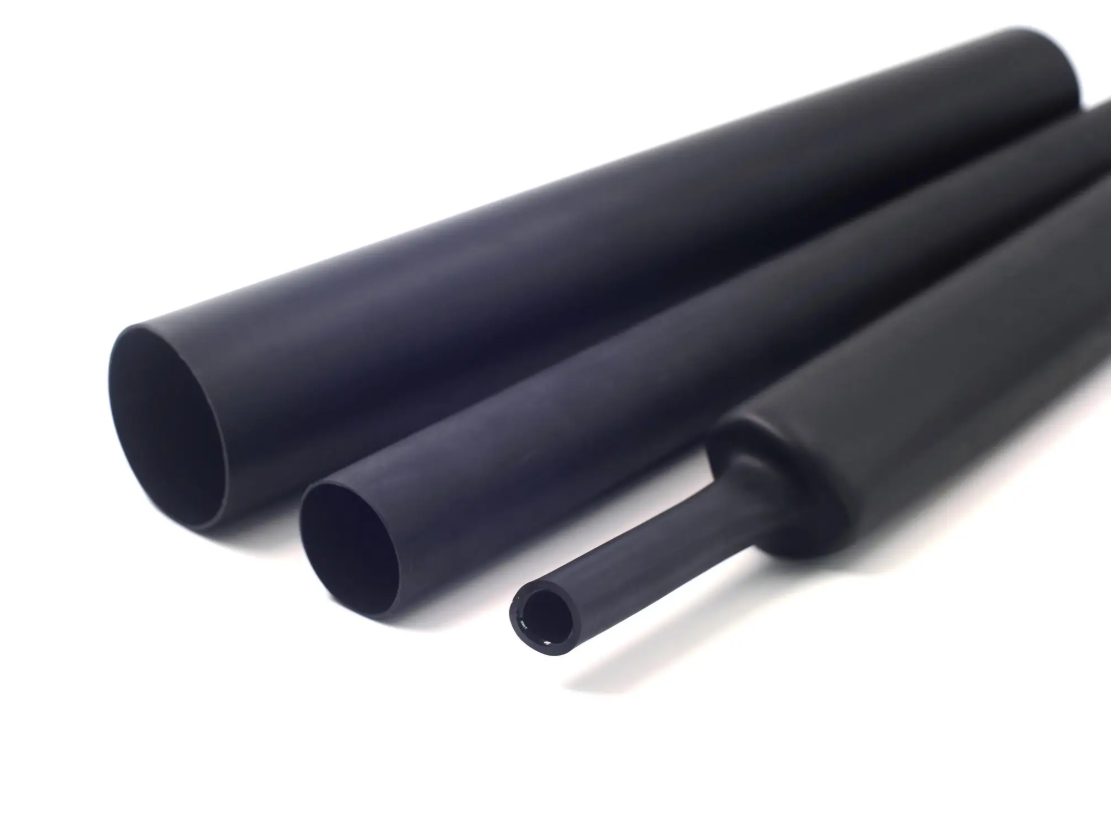
Specifying the correct grade of heat shrinkable tubing for any electrical application requires systematic evaluation of five key parameters: operating temperature range, chemical environment, required shrink ratio, wall configuration (single-wall or dual-wall), and regulatory compliance requirements. Overlooking any one of these factors risks selecting tubing that fails prematurely in service — either through thermal degradation, chemical attack, inadequate recovery to grip the substrate, or moisture ingress through improperly sealed tube ends. This guide provides a structured framework for making the selection decisions that determine whether heat shrinkable tubing delivers the protection its installation is designed for throughout the application's full service life.
Step 1: Define the Thermal and Chemical Environment
Temperature is the first filter in heat shrinkable tubing material selection. For applications with continuous operating temperatures below 125°C and no aggressive chemical exposure — the conditions covering the majority of automotive interior, consumer electronics, and general industrial wiring tasks — standard cross-linked polyolefin is the appropriate and most cost-effective material. This is the material grade used in KAIHENG K&S's K-102 single-wall and K-2 flame-retardant product series — both UL224-certified for general wiring applications. If the operating temperature exceeds 125°C at any point in the installation, move to high-temperature polyolefin rated to 175°C, or to PTFE for applications requiring continuous service above 200°C. Once the thermal limit is established, overlay the chemical resistance requirement: if the tubing will contact fuels, oils, or industrial solvents, consult the material's chemical compatibility table and step up to a more resistant grade if any incompatibility is identified.
Step 2: Determine Wall Configuration — Single-Wall or Dual-Wall
Single-wall heat shrinkable tubing provides electrical insulation and a degree of mechanical protection wherever moisture sealing is not a primary concern — indoor wiring, electronics assemblies, harness color coding, and component identification. Dual-wall tubing adds a co-extruded inner adhesive layer that melts and flows during heat activation, filling the microscopic voids between the tube wall and the substrate surface and solidifying on cooling as a flexible, waterproof adhesive bond. This adhesive sealing mechanism makes dual-wall tubing the specification of choice for outdoor wiring, underground cable splices, marine installations, automotive underbody harnesses, and any application where moisture ingress at the tube ends would allow capillary water migration to reach unprotected conductors. KAIHENG K&S's DW series provides this dual-wall sealing performance for standard temperature applications, while the KMDW and KHDW series add the medium and heavy-wall thicknesses needed for applications requiring both moisture sealing and mechanical impact resistance.
Step 3: Verify Shrink Ratio and Size for Correct Fit
The final sizing step is often underestimated in importance. Before ordering, measure the maximum outer diameter of the widest point that the tubing must slide over — typically the connector body or largest cable diameter — and verify that the tubing's expanded inner diameter is at least 10–20% larger than this dimension to allow easy installation without forcing. Then verify that the tubing's fully recovered inner diameter is smaller than the minimum substrate diameter — typically the cable jacket behind the connector — to ensure a firm grip. If a single 2:1 ratio size cannot satisfy both conditions simultaneously, move to a 3:1 ratio tubing that accommodates a wider range of substrate diameters within a single product. KAIHENG K&S stocks heat shrinkable tubing from 1mm to 80mm diameter across 2:1 and 3:1 ratio grades, providing the size range needed for any application from fine electronics wire to large-diameter power cable terminations.