HDPE Pipe Fusion Machine Technology: From Manual to CNC Fully Automatic Systems
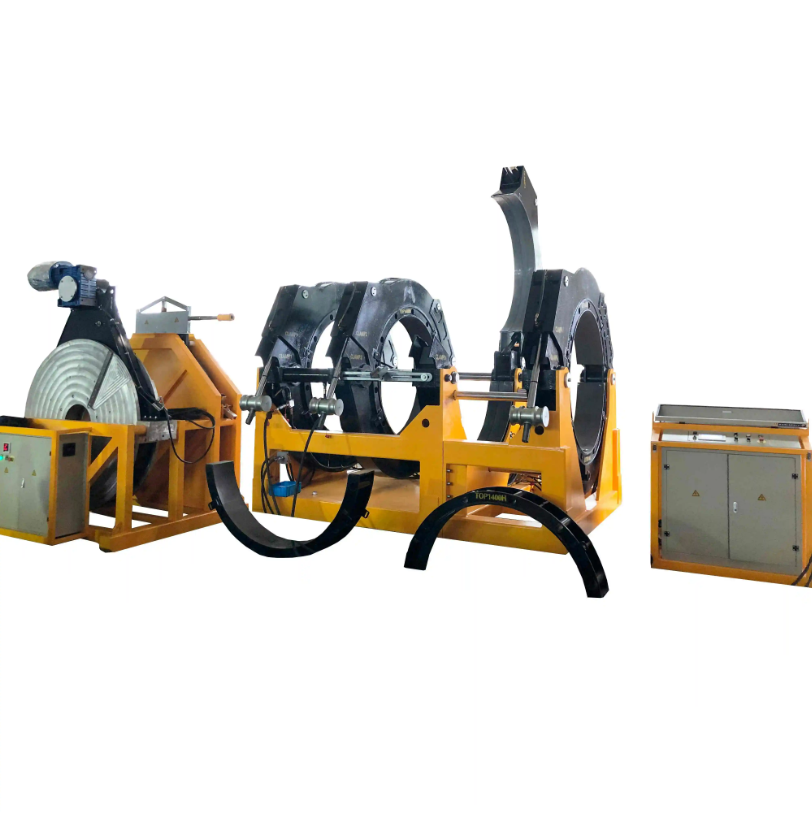
The evolution of hdpe pipe fusion machine technology over the past four decades has been one of the most significant advances in pipeline construction engineering — transforming pipe joining from a craft-dependent manual process into a precision-controlled, fully automated operation capable of delivering verifiably consistent results on every joint. Understanding this technological evolution, and where each level of automation is most appropriately deployed, helps project planners and equipment buyers make informed investment decisions.
Manual Butt Fusion: The Foundation
Manual butt fusion machines represent the entry point of the technology: a frame-and-clamp system that holds the pipes in alignment while the operator manually applies drag force to move the carriage during the fusion cycle. The heating plate temperature is controlled electronically, but fusion pressure and timing depend entirely on the operator following the prescribed procedure. Manual machines are lightweight, low-cost, and appropriate for small-diameter pipes (typically up to 160mm OD) in repair and service connection work. Their limitation is operator dependency — consistent quality requires trained, experienced operators executing the procedure identically on every joint under varying field conditions.
Hydraulic Butt Fusion: The Professional Standard
Hydraulic fusion machines replace manual force application with a powered hydraulic circuit, providing controlled, consistent fusion pressure that can be set and maintained regardless of operator fatigue or inconsistency. The hydraulic system drives the carriage through the complete fusion cycle — facing, heating, bead-up, fusion pressure, and cooling — with the operator managing the sequence and timing according to procedure. Professional hydraulic machines cover pipe diameters from 63mm to 1600mm and beyond, with hydraulic forces sufficient for the largest and thickest-walled pipes used in major infrastructure applications. The consistency advantages of hydraulic control translate directly into more reliable joint quality compared with manual methods, particularly on larger pipe diameters where manual force application becomes physically demanding and difficult to control precisely.
CNC Fully Automatic: The Quality Frontier
CNC fully automatic butt fusion machines eliminate operator judgment from the fusion process entirely. The machine's computer controller manages all parameters of the fusion cycle — heating time, fusion pressure profile, cooling duration, and carriage movement — according to the fusion parameters programmed for the specific pipe material and geometry being welded. Servo-driven carriage systems provide alignment precision to within ±0.1mm. Integrated sensors monitor actual fusion force and pipe temperature, adjusting machine behavior in real time to maintain optimal process parameters even if ambient conditions change. Every fusion cycle is recorded in an electronic database with a unique joint identifier, creating a complete, tamper-proof quality record for the pipeline.
Data Logging and Quality Assurance
The data logging capability of modern CNC fusion machines has transformed quality assurance for HDPE pipeline projects. Previously, joint quality was verified through destructive testing of a statistical sample and operator documentation of process compliance — a system that left significant audit gaps. CNC machines generate complete electronic records of every fusion cycle including: machine serial number and calibration status, pipe material specification, operator identification, date and time, fusion temperature and pressure curves, cooling completion time, and any process deviations detected during the cycle. This comprehensive data set satisfies the most stringent project quality documentation requirements and provides project owners with independent verification of every joint's production quality.
Selecting the Right Automation Level
The appropriate level of fusion machine automation for any project depends on joint volume, quality documentation requirements, operator skill availability, and budget. For low-volume service and repair work with experienced operators: manual machines are appropriate. For medium-volume field projects on 63–630mm systems: hydraulic machines provide the best balance of performance and cost. For high-volume infrastructure projects, large-diameter applications, or projects with mandatory electronic documentation requirements: CNC automatic machines are the specification-compliant choice. Hangzhou Welding Technology's product range spans all three levels, allowing buyers to match machine specification to application requirements precisely across their complete product portfolio.