Top Earthmoving Equipment Types Every Construction Professional Should Know
A thorough knowledge of available earthmoving equipment types is one of the most valuable assets a construction professional can possess. The ability to identify the right machine for each task — rather than defaulting to the same familiar equipment regardless of the application — is the hallmark of an experienced site manager or project engineer. Different earthmoving tasks demand fundamentally different machine capabilities, and deploying the wrong equipment leads to inefficiency, excessive wear, and potential safety risks. This article provides a comprehensive overview of the principal earthmoving equipment types available today, their operating principles, and the applications to which each is best suited.
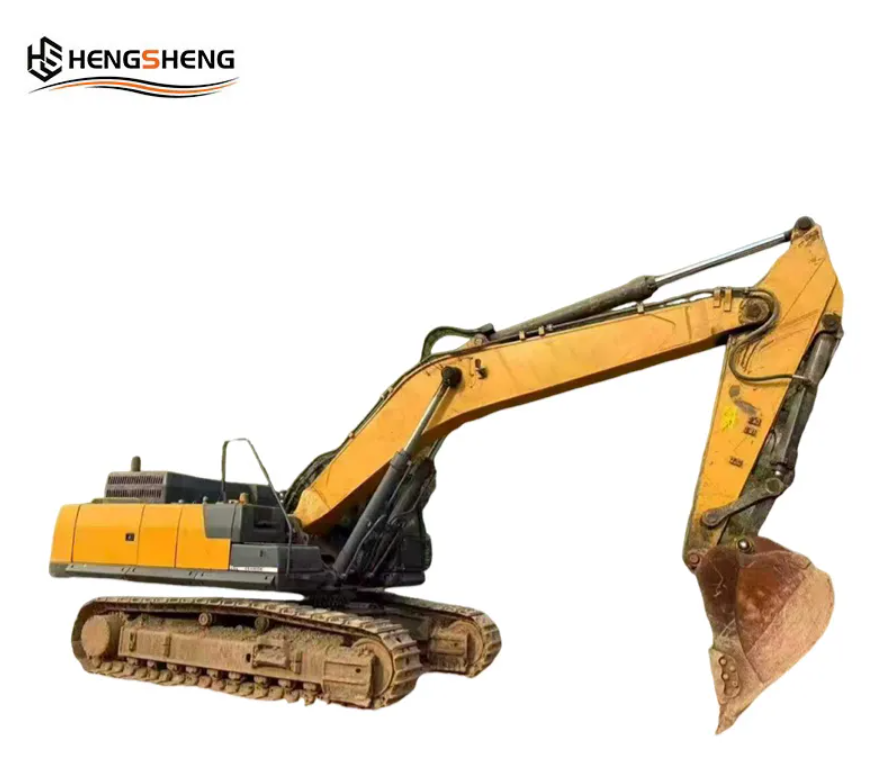
Hydraulic excavators are the universal workhorse of earthmoving, capable of performing digging, loading, trenching, grading, and lifting operations in a single machine. Their slewing superstructure — which can rotate a full 360 degrees — combined with a multi-jointed working arm and a wide range of interchangeable attachments makes them the most versatile earthmoving machine available. Ultra-heavy-duty models like the SH600-9 with a 56-ton operating weight are designed for the most demanding large-scale projects, generating bucket digging forces of 271kN and arm digging forces of 328kN that can penetrate even the hardest rock and most compacted ground. Smaller excavators in the 20–35 ton class cover the mid-range of general construction earthmoving, while compact excavators under six tonnes serve confined urban sites and restricted-access applications with remarkable capability.
Scrapers and Motor Graders: Specialized Earthmoving Tools
For highway construction and airfield development projects where large areas of ground must be shaped to precise gradients and cross-sections, motor graders are the earthmoving specialist of choice. Equipped with a long, adjustable moldboard blade that can be tilted, rotated, and offset in multiple directions, the motor grader is capable of creating the accurate flat and cambered surfaces required for road bases, subbases, and finished pavement layers. Modern motor graders are equipped with GPS-based machine control systems that guide the blade automatically to the design surface, delivering unprecedented accuracy at production rates that manual grading operations could never approach.
Compaction equipment — vibrating rollers, tamping rollers, and pneumatic tyre rollers — is another essential component of any earthmoving equipment fleet. Soil compaction is the process of densifying fill material to reduce its voids ratio, increase its load-bearing capacity, and reduce its susceptibility to settlement and water infiltration. Improperly compacted fill material is the root cause of many costly construction failures, including road surface cracking, foundation settlement, and slope instability. Vibrating rollers compact granular soils and granular sub-base materials efficiently through the combined action of static weight and vibratory energy, while tamping rollers are effective on cohesive soils such as clays and silts. Selecting and deploying the correct compaction equipment is as important as the initial cut-and-fill operations in ensuring the long-term performance of any earthwork construction.
Technology Integration in Modern Earthmoving
Modern earthmoving equipment is increasingly integrated with digital technologies that enhance productivity, safety, and precision. Machine control systems use real-time GPS positioning data to guide blades and buckets automatically to design grades and levels, reducing the reliance on traditional survey stakes and dramatically cutting the number of passes required to achieve a finished surface. Telematics systems track machine location, engine hours, fuel consumption, and fault codes in real time, enabling fleet managers to optimize equipment utilization, schedule preventive maintenance proactively, and reduce fuel waste through more informed operator coaching and job site planning.
Safety technology has also advanced significantly on modern earthmoving equipment. Proximity warning systems alert operators to the presence of other machines, vehicles, and personnel in the blind spots around large machines. Automatic engine shutdown systems reduce idle time and fuel waste when machines are left unattended. Overload monitoring systems alert operators when bucket or blade loads approach structural limits, reducing the risk of component fatigue and failure. Together, these technology advances are making earthmoving operations safer, more efficient, and more environmentally responsible than at any previous time in the industry's history, and they are rapidly becoming standard features on quality earthmoving equipment from leading manufacturers worldwide.