Top Performance Features of a Modern flake ice machine
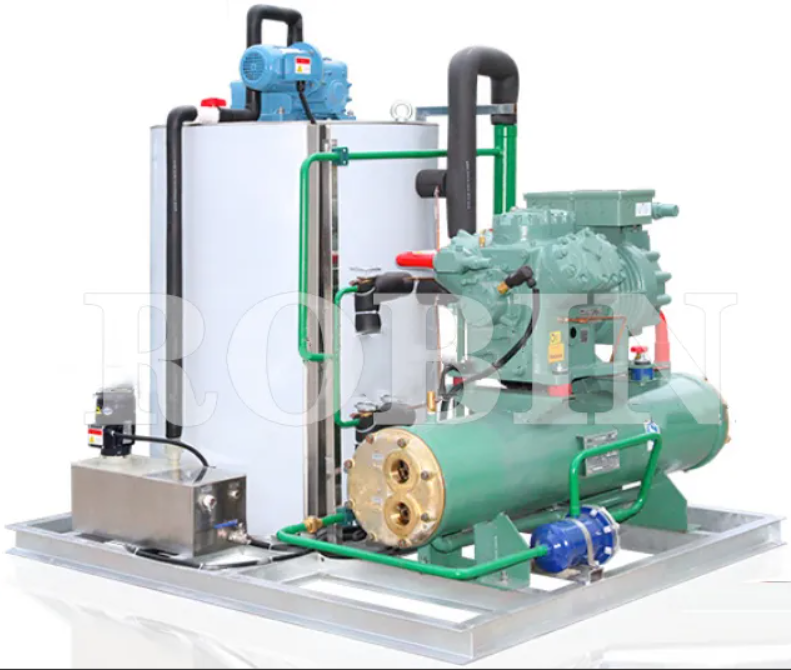
The engineering specification of a modern flake ice machine has advanced considerably over the past decade, driven by rising energy costs, more demanding food safety regulations, and operators' expectations of reduced maintenance and extended machine lifespan. Today's leading machines deliver significantly better performance per kilowatt of energy consumed than their predecessors while meeting the most stringent hygiene and reliability standards for food-grade applications. Understanding the key technical features that define a premium machine helps buyers make well-informed procurement decisions in a market with significant variation in quality.
The Evaporator Drum: Heart of the System
The evaporator drum is the central component of any flake ice machine. Water is pumped from a water tank onto the inner surface of the rotating drum, where it freezes almost instantly on contact with the refrigerant-cooled drum wall. A motorised ice scraper — also called an ice skate — continuously shaves the thin ice layer from the drum wall as it rotates, producing a continuous fall of flake ice into the storage bin or conveying system below. The precision of the scraper mechanism, the surface finish of the drum interior, and the uniformity of the water distribution plate all directly determine the quality, consistency, and thickness of the produced flake ice. Premium drums use stainless steel SUS304 or carbon steel with chromium coating for the freezing surface, providing a combination of corrosion resistance, thermal conductivity, and durability that ensures consistent ice quality throughout the machine's service life.
Compressor Technology and Refrigerant Efficiency
The refrigeration compressor is the most energy-intensive component of a flake ice system, typically accounting for 60 to 70 percent of total machine energy consumption. World-class flake ice machines use compressors from internationally recognised manufacturers — including brands from the USA, Germany, Denmark, and Japan — whose precision engineering delivers better volumetric efficiency, lower thermal losses, and greater reliability under continuous industrial duty cycles than lesser-quality alternatives. Variable-speed or dual-compressor configurations allow some machines to modulate their output in response to demand, reducing energy consumption during periods of lower ice production requirements.
PLC Control and Multi-Function Protection
The PLC control system provides intelligent, automated management of every operational variable: water pump speed, refrigerant pressures, drum rotation speed, ice-bin sensor status, and alarm management. Multi-function protection circuits automatically respond to water shortage, phase reversal, high pressure, low pressure, and motor overload conditions — stopping the machine safely before damage can occur and alerting operators via alarm outputs. This protection architecture is critical for machines operating in remote or unsupervised locations where rapid human intervention is not possible. Premium PLC systems also provide remote monitoring and control capability, allowing machine status and production data to be viewed and managed from a central control room or via mobile device.
Build Quality and Material Specification
A flake ice machine that will reliably deliver ten or more years of continuous service must be built to exacting material and fabrication standards. The machine frame and housing should be constructed from stainless steel or powder-coated structural steel with a corrosion protection specification appropriate for the operating environment. In humid coastal environments or cold rooms with high condensation, stainless steel housing provides the most durable long-term solution. All components that contact the produced ice — the drum interior, the ice chute, and the storage bin — must be manufactured from food-grade stainless steel to meet food safety requirements. Bearings, seals, and drive components from internationally accredited manufacturers complete the specification of a machine built for the long term.
Ice Thickness Consistency and Quality
The commercial value of flake ice depends not just on the quantity produced but on the consistency of every flake. Flake ice with highly variable thickness — some pieces too thin and powdery, others too thick and chunky — does not provide uniform cooling and does not present well in retail display applications. Premium machines maintain a flake thickness of 1.8 to 2.3 mm across the entire production cycle through precise control of drum rotation speed, refrigerant evaporating temperature, and water distribution rate. This consistent quality is the signature of a well-designed and well-calibrated machine from an experienced manufacturer.