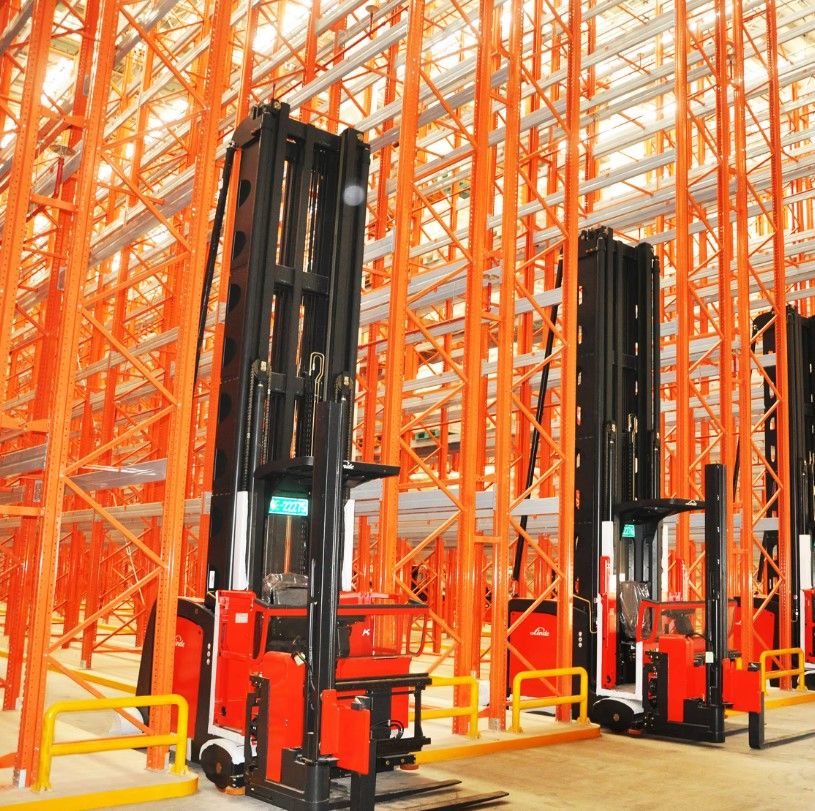
Investing in a Stacking Lift Cold Storage High Bay Very Narrow Aisle Racking System is a major capital commitment that will define the operational capability of a warehouse for ten to twenty years or more. Getting the selection right requires careful evaluation of the facility's physical envelope, throughput requirements, product characteristics, and operational management capabilities. This guide provides the essential criteria for making a well-informed decision.
Confirming the Available Clear Height
The most fundamental parameter for a high-bay VNA system is the building's clear internal height — the distance from the finished floor level to the underside of the lowest structural element, roof beam, or service that would obstruct the stacking lift's mast at full elevation. The practical minimum clear height for a worthwhile high-bay VNA installation is typically ten metres, which supports approximately seven to eight pallet levels. Buildings with fifteen to twenty metres of clear height unlock the system's full density potential, supporting ten or more storage levels and providing the most compelling cost-per-pallet-position economics.
Stacking Lift Cold Storage High Bay Very Narrow Aisle Racking System – Selection and
Configuration Guide
Throughput — the number of pallet movements per hour required at peak operational demand — determines how many stacking lifts are required in the installation. A single VNA aisle typically supports one stacking lift, which can perform 30 to 60 pallet movements per hour depending on the aisle length, lift height, and travel speed of the specific equipment. If peak throughput requirements exceed the capacity of a single aisle, the installation must include multiple aisles, each with its own lift. Accurate throughput modelling, based on actual or forecast peak-day pallet volumes, is essential to ensure the system is correctly sized at the outset.
Pallet Size Standardisation
VNA racking systems deliver the best performance and the highest storage density when the pallet sizes in use are standardised. Variable pallet sizes require variable bay widths and beam spacings, creating complexity in both the racking design and the stacking lift programming. Before committing to a VNA installation, review the pallet sizes in current use across your supply chain and consider whether standardisation — onto a single ISO pallet size, for example — is achievable. The operational and density benefits of standardisation typically justify the supply chain adjustments required to achieve it.
Cold Store Environmental Requirements
For cold storage applications, confirm that both the racking system and the stacking lift equipment are rated for the operating temperature range of your facility. Frozen food facilities operating at minus 18 to minus 25 degrees Celsius require racking with cold-temperature-rated powder coating and stacking lifts with cold-rated hydraulic systems, battery packs, and electronic controls. Not all racking and lift suppliers are equipped to provide cold-rated systems — always verify the operating temperature specification before placing an order, and request documentation confirming compliance with the relevant cold storage application standards.
A well-selected and correctly installed stacking lift cold storage high bay very narrow aisle racking system will deliver outstanding storage density, operational efficiency, and product integrity for the full service life of the facility — making it one of the most rewarding warehouse infrastructure investments available today.