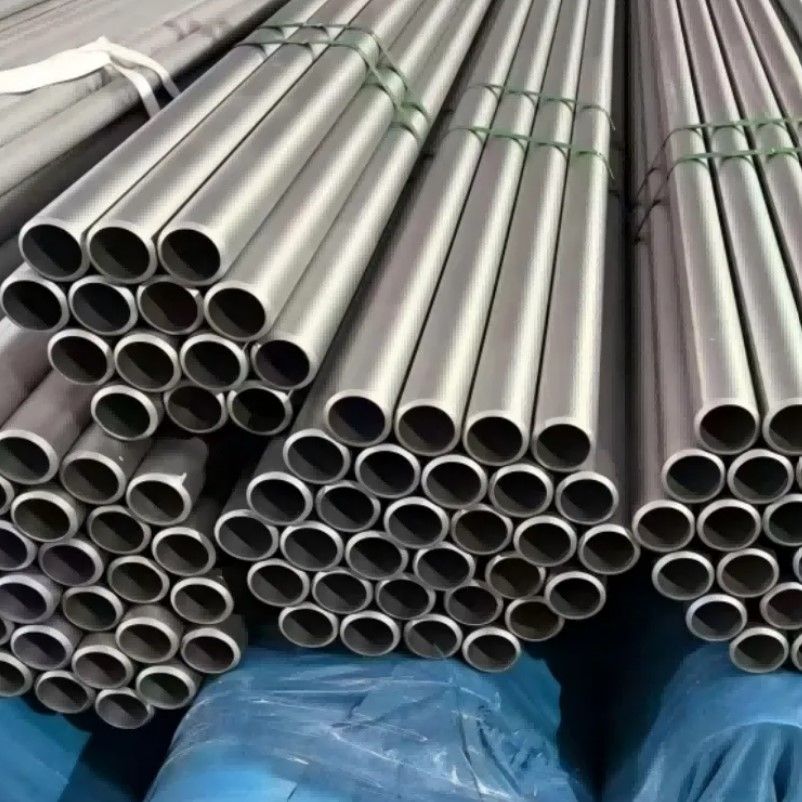
The versatility of the ERW steel pipe has made it one of the most widely deployed pipe formats across global industry. From oil field gathering systems and water treatment networks to food processing lines and structural building frames, electric resistance welded pipes appear in virtually every sector of the modern economy — each application exploiting a different combination of the format's inherent advantages in cost, dimensional consistency, and material availability.
Oil and Gas: Gathering and Distribution
In the upstream and midstream oil and gas sector, ERW pipes form the backbone of field gathering networks that transport crude oil, produced water, and associated gas from wellheads to central processing facilities. Carbon steel ERW pipes to API 5L Grade B, X42, X52, or X65 are specified depending on the operating pressure and sour service requirements of the specific gathering system. In offshore and onshore chemical injection and instrument tubing applications, stainless steel ERW tubing in 316L grade provides the combination of corrosion resistance and cost-effectiveness that makes it the preferred format over seamless in these duties.
Food, Beverage, and Pharmaceutical
Stainless steel ERW pipe to ASTM A312 Grade 304L or 316L is the standard material for sanitary piping in food and beverage production — carrying milk, juice, beer, carbonated drinks, and pharmaceutical process streams. The internal surface of these pipes is electropolished or mechanically polished to a defined Ra roughness value (typically 0.4–0.8 μm Ra) to eliminate sites for bacterial adhesion and facilitate clean-in-place (CIP) and steam-in-place (SIP) sanitisation cycles. Tri-clamp fittings and sanitary flanges are used to create hygienic, tool-cleanable joints throughout these systems.
Sanitary Pipe Standard
For food and pharmaceutical applications, specify stainless steel ERW pipe to ASTM A270 (Sanitary Tubing) or 3-A Sanitary Standards, which define additional surface finish and inspection requirements beyond the mechanical pipe standards.
Water Treatment and Infrastructure
Municipal water supply, wastewater treatment, and industrial cooling water systems rely heavily on carbon steel and stainless steel ERW pipes across a wide diameter range. Stainless steel grades 304 and 316 are used for drinking water distribution where chloride content or chlorination chemistry would cause corrosion in carbon steel. Large-diameter carbon steel ERW pipes form the trunk mains and distribution headers of municipal systems, with internal lining or cathodic protection providing corrosion mitigation over their service life.
Structural and Mechanical
Beyond fluid conveyance, ERW pipe serves extensively as structural hollow sections in construction, mechanical engineering, and furniture manufacturing — exploiting its consistent cross-section, smooth surface finish, and competitive material cost. Architectural columns, machine frames, conveyor structures, and automotive exhaust systems all utilise ERW pipe's combination of strength, workability, and economy that makes it a universal engineering material in the modern industrial world.