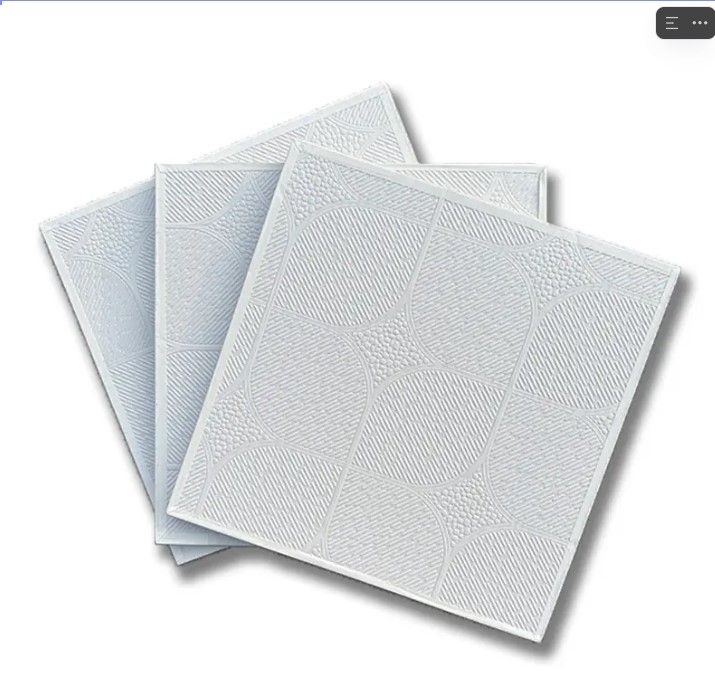
When specifying ceiling and wall panels for a construction or renovation project, the sheer number of available materials can make selection challenging. Understanding how calcium silicate board compares to other commonly specified alternatives — including standard gypsum board, fiber cement board, mineral wool panels, and PVC ceiling systems — is essential for making an informed, project-appropriate choice.
Calcium Silicate Board vs. Standard Gypsum Board
Standard gypsum drywall is the most widely used interior panel product in the world, valued for its low cost, ease of installation, and smooth, paint-ready surface. However, it has significant limitations in wet and humid environments where it is susceptible to moisture absorption, mold growth, and physical delamination. Calcium silicate board outperforms gypsum board in moisture resistance, fire resistance, dimensional stability, and durability in demanding environments, though at a higher material cost. For applications where long-term performance matters more than initial material price, calcium silicate board represents superior value.
Calcium Silicate Board vs. Fiber Cement Board
Fiber cement board shares some characteristics with calcium silicate board — both are dense, durable, and resistant to moisture and fire. The key difference lies in their weight and the specific applications they suit best. Fiber cement board is heavier and is typically used for external cladding and high-traffic flooring applications. Calcium silicate board is lighter and better suited to internal ceilings and wall linings where weight loading on suspension systems is a consideration.
Calcium Silicate Board vs. Mineral Wool Ceiling Panels
Mineral wool ceiling panels excel in acoustic absorption, making them the preferred choice in environments where sound control is the primary performance requirement. However, mineral wool panels are typically softer, less dimensionally stable, and more susceptible to damage from impact and moisture than calcium silicate board. For projects requiring a combination of fire resistance and structural robustness — rather than maximum acoustic absorption — calcium silicate board is the stronger performer.
Calcium Silicate Board vs. PVC Ceiling Systems
PVC ceiling systems are popular in residential and light commercial applications where their low cost, ease of installation, and moisture resistance are attractive. However, PVC has critical limitations in fire safety — it is combustible and releases toxic hydrogen chloride gas when burned. In any application with genuine fire safety requirements, calcium silicate board's non-combustibility makes it categorically superior to PVC alternatives, regardless of cost comparisons.
Making the Right Choice
The optimal ceiling material for any project depends on the specific balance of performance requirements, aesthetic goals, budget constraints, and regulatory obligations. Calcium silicate board consistently delivers the best combination of fire safety, moisture resistance, dimensional stability, and long-term durability, making it the specification of choice when performance requirements are demanding. For projects where budget is the primary driver and performance demands are modest, simpler and less expensive alternatives may suffice — but for any commercial, healthcare, educational, or industrial project, calcium silicate board deserves serious consideration.